
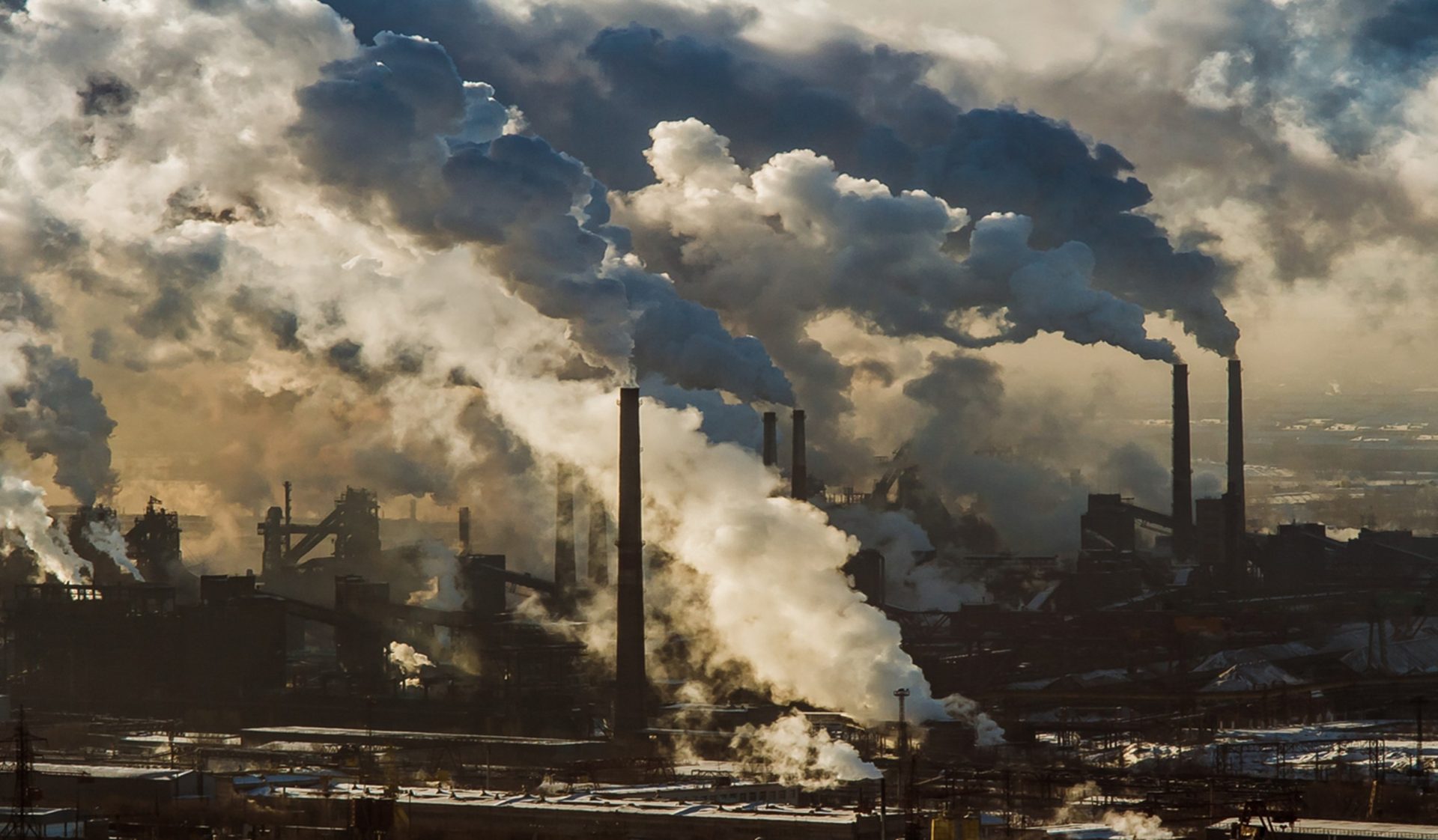
According to the Court of Justice, “Ambient Air Quality” directives do not directly grant individuals a right to compensation in the event of a breach of the concentration limit values of pollutants. Individuals must nevertheless be able to obtain from national authorities the adoption of measures required under these directives (Case C-61/21).
The factual background
JP sought before a French administrative court the annulment of the implicit decision by which a local public authority refused to adopt measures to solve his health problems linked to environmental pollution in the agglomeration of Paris where he lived. JP also sought compensation from the French Republic for the damage to his health allegedly caused by the deterioration of the ambient air quality due to the failure of the French authorities to fulfil their obligations under Directive 2008/50/EC on ambient air quality.
Because the court of first instance dismissed his action, JP lodged an appeal before an Administrative Court of Appeal. The latter referred to the Court of Justice (the “Court”) the question of whether and under which conditions a Member State incurs liability for damage caused to an individual by the deterioration of air quality as a result of the exceeding of the limit values for pollutants in the ambient air.
Absence of a right to compensation under the EU directives …
In its judgment of 22 December 2022, the Grand Chamber of the Court recalled that the principle of State liability for loss and damage caused to individuals as a result of breaches of EU law requires three cumulative conditions to be satisfied, namely that: (i) the rule of EU law infringed must be intended to confer rights on them; (ii) the infringement of that rule must be sufficiently serious; and (iii) there is a direct causal link between such infringement and the loss or damage claimed by those individuals.
Concerning the first condition, the Court referred to well-established case-law which states that those rights arise not only where they are expressly granted by provisions of EU law, but also by reason of positive or negative obligations that EU law clearly imposes upon individuals, Member States or EU institutions.
In the present case, Directive 2008/50 and previous directives (the “Ambient Air Quality directives”) oblige Member States, on the one hand, to ensure that levels of pollutants (such as nitrogen dioxide and microparticles) do not exceed certain limit values. On the other hand, where those limits are exceeded, the Ambient Air Quality directives impose on Member States an obligation to provide for appropriate measures to remedy those exceedances, for instance by means of air quality plans.
The Court found that those obligations pursue a “general objective of protecting human health and environment as a whole”. Hence, the Court ruled that it could not be inferred from those obligations that they implicitly confer rights on individuals and, consequently, that their violation would be capable of giving rise to Member State’s liability under EU law. In other words, the first condition for establishing Member State liability was not met. With this finding, the Court departed from the opinion of its Advocate General.
… but other means of redress are available
Despite its ruling that the conditions of Member State liability under EU law were not met, the Court recalled that the persons concerned must be able to require the competent national authorities to adopt an air quality plan if the limit values provided in the Ambient Air Quality directives are violated.
Finally, the Court underlined that its ruling did not exclude Member State’s liability under less strict conditions based on national law, in which case the violation of the Ambient Air Quality directives could be taken into account as a factor which may be relevant for the purposes of establishing the liability. The Court’s ruling also does not preclude national courts from issuing injunctions together with periodic penalties to ensure that Member States comply with the obligations arising under the Ambient Air Quality directives.
Our take on the judgment
In its judgment, the Court seems to encourage individuals to seek justice before national courts under a – potentially – more favourable national legislation. However, following this line of reasoning might prevent a level playing field in environmental compensation claims across the EU. In any event, the Court did not completely rule out the success of future claims under other provisions of EU law. Time will tell whether, despite the Court’s judgment, applicants are able to effectively invoke EU law, alone or together with national law, in support of liability claims regarding air quality before the courts of the Member States.
For the time being, the Commission has adopted – in the framework of the European Green Deal – a Proposal for a Directive on ambient air quality and cleaner air for Europe which, amongst others, aims to establish an effective right for people to be compensated where damage to their health has occurred as a result of a violation of prescribed rules, in particular with regard to limit values or air quality plans.
For further information about this case and/or for general legal advice relating to EU litigation or EU environmental law, please contact Pierre de Bandt and Raluca Gherghinaru.